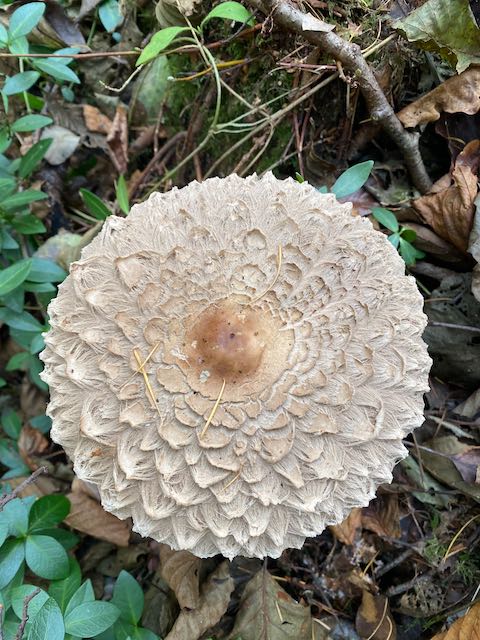

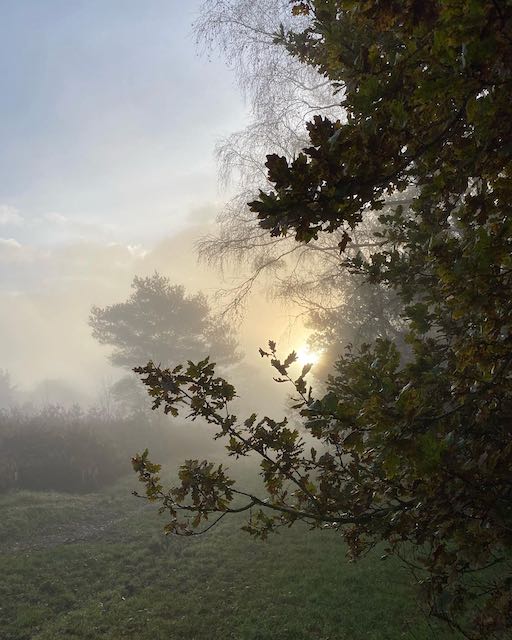

Time to relax and unwind and take a breath, with winter slowly approaching there’s been a wonderful autumn to enjoy and hasn’t it been a fantastic one? Where I am in West Sussex the weather has been so mild and the wind has thankfully been low so it has elongated the length of time the leaves have stayed on the trees, the colours have been exquisite, it really has been stunning. There’s been plenty of woodland walks with our new dog Sophie, lots of foraging for mushrooms and its been a pleasure to enjoy this season. I’ve been a bit lazy in the garden to be honest and that’s ok with me, I like to just leave things be and let it all wind down naturally.
I’ve got quite a lot growing outside and in at the moment. The greenhouse delights are mainly comprised of salad leaves like pakchoi, mizuna, endive, mustard and winter lettuces, they’re still growing strong but alas I feel I am not winning the war against flea beetle as they are now showing signs of attack, a lot of the leaves are getting quite a few holes! I’ve got some garlic sown in there too (see below for how to sow yours) and some peas grown simply for shoots that are delicious added to soups and risottos. You can sow pea shoots now but germinate them in warmth, simply bung a load of pea seeds in a container with compost, cover and water in…. they’ll come up in no time and you can just cut off the very tasty tips, any pea seeds will do.
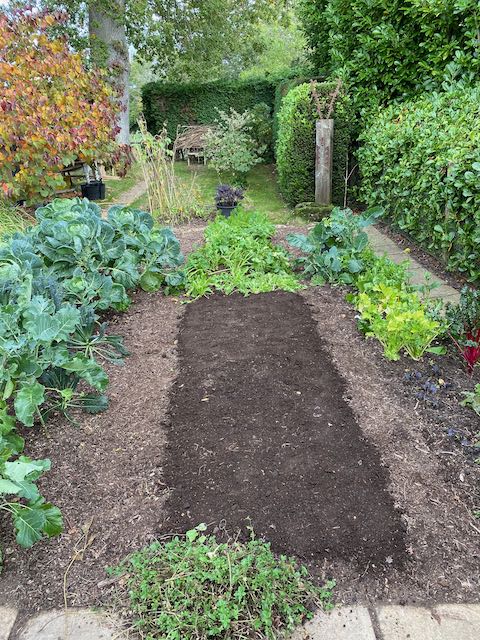
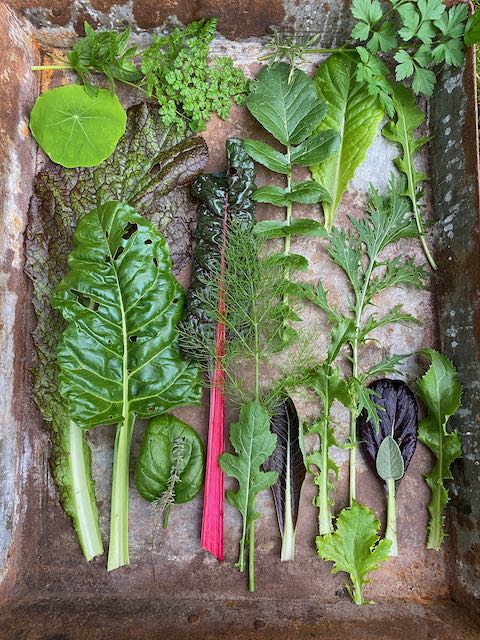
In the outside space, the brussels sprouts have been the stars for me this year, they have huge buttons and are delicious, usually they come out smaller but they are a really good size so I am delighted! Kale is still going strong, it’s a come again plant that just keeps going and will withstand frosts so will keep on into the new year. My parsnips have been so so…. quite big but with a lot of damage, some rotten patches appearing in them so I will keep an eye on the rest and maybe pull them up early. I did sow some late carrots and they’re small but delicious so great for adding to stocks or roasting whole. We haven’t had frosts yet so the green leafy things like chard, lettuce, chicory and nasturtiums are hanging in there! I collected a whole variety of leaves from around the garden ( see the pic below) which looked super all together, such varied shapes and textures, made for a very interesting edible collage.
If you are like me and can never sit still there are some jobs you can do now. If you haven’t done so yet, there is still time to do some sowing as the climate is still relatively mild; once it starts getting hard frosts then you really need to wait until spring.
Garlic.
You can get two types of garlic called soft neck or hard neck. When visually comparing softneck vs. hardneck garlic, it’s easy to distinguish between the two. Hardneck garlic (Allium sativum subsp. ophioscorodon) will have a woody stem protruding up through the centre of the circle of cloves. Even if this stem is trimmed at the top of the garlic head, a portion remains inside. Referred to as a scape, this flowering stem is the result of the garlic plant bolting during the growing season. If you were to observe hardneck garlic growing in the garden, the scape would produce an umbel-type flower cluster. After flowering, teardrop-shaped bulbs would form. These can be planted to form new garlic plants. produces a single layer of large, oval to triangular-shaped cloves, usually numbering between 4 to 12 per head.
Softneck garlic (Allium sativum subsp. sativum) usually bigger than hard neck, up to 20 cloves, rarely bolts, but it’s still easy to distinguish whether you have softneck or hardneck garlic when it does. If softneck garlic blooms, a shorter pseudo stem emerges and a small number of bulbs are produced. Softneck garlic is the most common type found in grocery stores, braids – If you purchase a braid of garlic, it’s most likely softneck and it’s these ones that do seem to store better.
Elephant garlic is actually members of the leek family. They have the familiar clove-like heads and same pungent flavour as softneck and hardneck garlic.
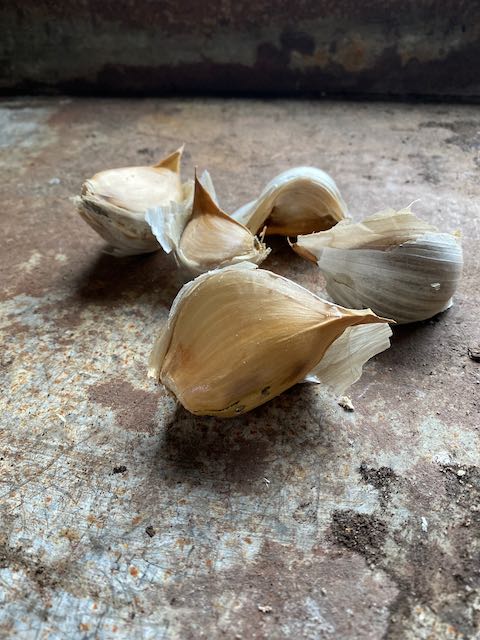
This year I have sown garlic in the ground, in the greenhouse beds and in pots. I’m interested to see which fares best. For ground sowing I spaced approx. 15cm apart and approx. 2 cm down. Always plant with the pointy end up.


Broad Beans:
Love them or hate them? A bit like marmite these ones but they’re really easy to grow and one of the first to give good greens early in the year, you just can’t beat a fresh broad bean salad… yummy. Like garlic, these can be sown now weather permitting for an early harvest next year or you can sow in spring. You can sow these direct in the ground, approx. 30cm apart. Don’t scrimp on space because when fully grown they need good air circulation around them to help prevent disease and enable pollinators. You can also sow in pots, like I do, I rarely sow direct, for me I get more success protecting the seedlings for a bit until they are bigger then plant out, there are differing schools of thought on this so it’s whatever works for you, there’s no right or wrong. My favourite varieties are ‘crimson flowered’ which have the most gorgeous coloured flowers and ‘Aquadulce’ which produces early in the year and has a good amount of seed pods per plant.
Sweet peas
Sweet peas are an annual flowering plant (flowers once a year) that is in the group termed Hardy Annuals. Hardy annuals (HA) are tolerant of frosty, cold weather and for this reason many gardeners will sow hardy annuals late autumn, to get a good head start for the following year. You can do this anytime from September but it’s still quite mild so by planting late autumn, the idea is that seedlings get their roots down before the cold weather slows growth and the following spring plants are ready and are raring to go. You can really only do this if you have an undercover option to overwinter your seedlings such as a greenhouse or a cold frame. If the cold weather has set in your area already it is possible to germinate inside a warm house, to overwinter until the spring, the main thing to note that if germinating inside I would move to an area that gets plenty of light for best results once the seedling has germinated. I haven’t sown any other annuals yet, apart from Sweet peas, I suspect that I will wait until the spring for the rest now, (March – April). Sow your seeds in modules or seed trays filled with compost, from February- April and they will be ready to plant out in May or June.
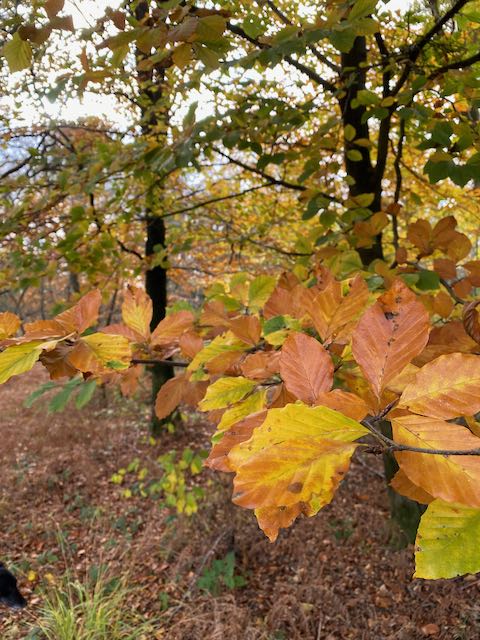
Have a tidy up………..but just not too much!! By all means it’s nice to ‘put the garden to bed’ and have a good tidy up, remove spent perennials and annuals, clear up leaves etc. but don’t go all out sterile! The messier the better it is for our wildlife. Leaving leaves, spent flower heads, twigs etc. in situ can be a great resource for all kinds of wildlife and tiny bugs. I barely touch the garden at this time of year; sure I will remove and empty old pots, cut down some annuals and mulch my veggie beds but leaves and things I leave. This is partly because I have a huge oak tree in the garden that layers the garden in a leafy autumnal blanket. I like to think of the leaves forming part of the natural yearly garden mulch, all doing great things for the soil under out feet as well as providing shelter. I collect a lot for leaf mould but this is from the lawn areas, I run a mower over the lawn and acting like a hoover it also chops the leaves into smaller, easily decomposable pieces. It’s easy to create your own leaf mould pile, I have simply got some sticks, and attached chicken wire in a circle and deposit all the leaves in there… they’ll take a year or so to fully decompose. Leaf mould can be used as a mulch, soil conditioner, potting mix or seed compost. It’s low enough in nutrients so as not to scold tender seedlings but with just the right qualities to dramatically improve soil structure and boost its water retention so highly versatile
Finally ! Mulch your beds! Vegetable beds, flower beds and greenhouse or polytunnel beds definitely all benefit greatly from winter mulch. A mulch is a layer of organic material applied to the surface of soil. I layer approx. a couple of inches or more towards the end of the year, or when beds become clear from harvesting. If like me, you have no dig beds then once established this is the only topical application I do year after year. By applying mulch you will improve the fertility and health of your soil, no excuses, if you do one thing then pop this job at the top of your list, your garden will love you for it.
Above all enjoy your garden and relax, just do what feels right and slowly and softly ease yourself into the festive period, it will be all about wreath making next so get your Christmas jumpers on !
Much love until then x