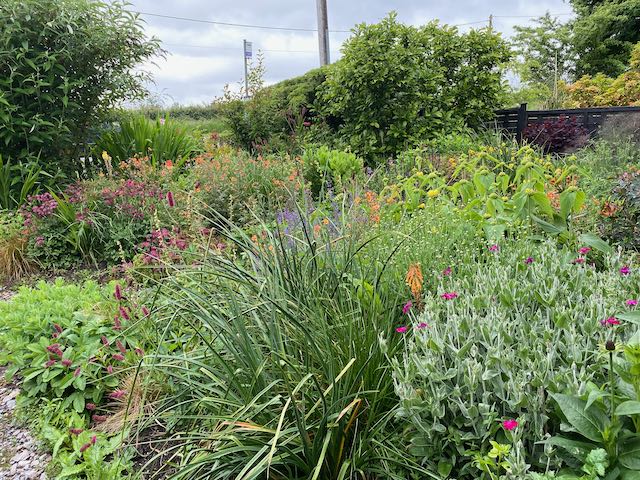
In the blink of an eye our gardens have flourished. I am based in Sussex and we have had an incredibly dry April, dare I say it, too hot really. But now we seem to be getting the April showers and I am sure I am not alone in breathing a sigh of relief that gardens can have a proper drink of consistent rain. Almost overnight you can hear the garden saying thank you and it’s all so green. My front garden ( below ) was a bare square patch of lawn two years ago and it is this time of year that it now starts to shine. The first yer of planting looked great and its a constant changeing palette, i move things here and there, some things work, some things get too thuggish but in its second year i am really pleased with it. This recent rain has given it a boost and it is looking glorious. One of the most exciting things that has happened is that I think because of the dry April, the slugs weren’t so abundant and my ‘Green Whizz’ Echinacea are up! Last year they were decimated but this year they’ve survived slug attack and are well on their way. It’s a super looking Echinacea so I’m excited to see it in its full glory later in the year. I am so proud of it, it’s been planted carefully to provide a diverse habitat for all and honestly you can sit in the garden and see that it’s teeming with wildlife, the humming of bees is incredible. It’s been such a rewarding thing to do, to think it was just lawn a couple of years ago and now it is a rich flower paradise which is just on its’ way to full splendour.
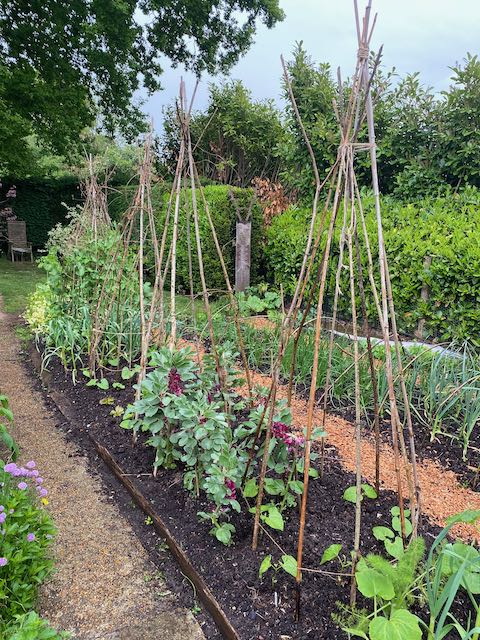
The veggie garden is also pretty stocked too now. I’ve got three beds which are a metre wide, about 6m long. One bed is entirely onions, spring onions and garlic ( I went a bit overkill I think!! ) and the rest are filled at the moment with lettuces, beetroots, peas, broad beans, nasturtiums, parsnips, runner beans, celery, kohlrabi ( failing!), oregano, rocket and parsley. I have carrots and potatoes in buckets. I’ve got leeks and some brassicas waiting to be planted out but I have no room ! They’re just potted on at the moment awaiting space. In an ideal world I try to transplant veggies from modules to the ground in about 4-6 weeks from sowing. Invariably the beds fill up and then I have veggies waiting. It’s absolutely fine to pot on veggies so they can keep growing while waiting to be planted out, it does them no harm and in some ways, they can withstand pest and slug attack a bit better as they are a little bit bigger when planted.
By the end of June the garlic will be harvested and drying and that will make way for some brassicas which I have just sown. It’s important to remember to keep sowing through the year to ensure you get food to eat from the garden all year round. If you follow me on Instagram I do a ‘What You Can Sow Now’ guide weekly. It’s just a way to break down sowing into small chunks so it’s not overwhelming. It’s all too easy to sow frantically at the beginning of the year and then run out of steam! My seed subscriptions are based around exactly that, avoiding the confusion of what to sow when; I send seeds out each month to you at the right time to sow to encourage you to have food all year round. With a little bit of planning it’s very achievable and a delight being able to pick something fresh even in winter. If you are interested in finding out more please visit my website www.queenofseed.co.uk
Peas are towering up a tepee, this year I’ve grown the giant ‘Alderman’, it can get over 6ft, the pods are appearing and soon we can start harvesting fresh peas, although to be fair they never make it into the kitchen as we love eating them fresh. The other tepees (all made from natural hazel sticks) are set to have runner and climbing beans up them , they’re small at the moment but they’ll be filled up later in the year.
So what else has been happening? Well the greenhouse is happy and housing the tender veggies, tomatoes, chillis, sweet peppers, cucumber and aubergines. I have done an experiment this year, I’ve planted some chilli and aubergines in the border inside the greenhouse and some in large pots. I will be interested t see which fare better. I’ve also planted a chilli outside in the veg bed, just to see what happens, I suspect it will not do as well but it will be interesting to compare harvests at the end of the year. I have got a couple of melons on the go inside but sadly they’re not looking very happy. I don’t hold out much hope for these but they may pick up once we get into full summer. I have cantaloupe melon ‘Pepito’ and a watermelon ( of which I can’t remember its name). The watermelon was badly attacked by aphids so I’m not holding out any great hopes.
Otherwise I am very happy with the garden, it makes me smile every day, I have an annual flower border that runs along side the greenhouse which is filling with cornflowers, cosmos, zinnia, and is mixing with the self seeded Verbena Bonariensis, Poppies, Erigeron, Echinaceas, Clematis, Asters and Scabious, it’s a particular part of the garden that’s a bit free and easy, a real cottagers delight and a hit with the bees and butterflies.
I am not sure about you but I have had more aphids this year than ever before and particularly in the greenhouse the white fly have been smothering my plants with seemingly extra vigour. I don’t use any pesticides or nasties in the garden at all, I let it all happen naturally but try to provide an environment that’s as diverse as possible with flower, herbs and veggies all mixed up together. Having a biodiverse garden really attracts a wide variety of insects and this in turn means that the natural ecosystems will be in place, with some insects predating over others at certain times and pest attack is kind of handled themselves. That said it’s so disappointing when you see leaves blistering up and going curly and plants suffering so there are a few things I do to help keep control.
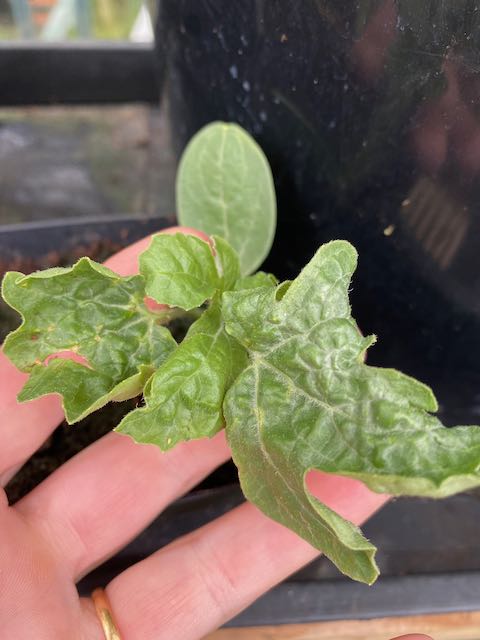
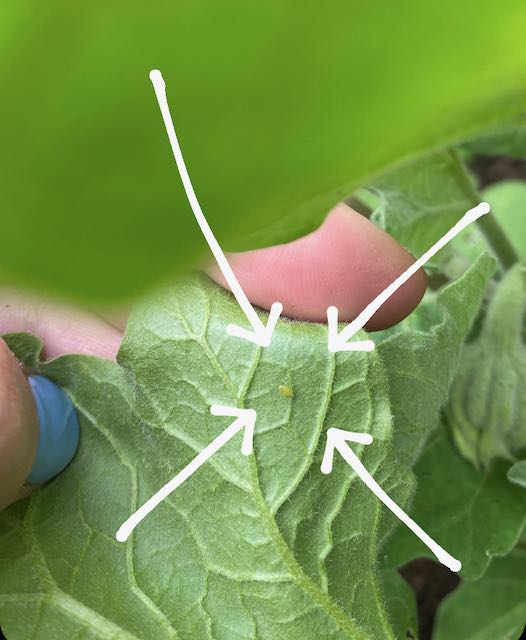
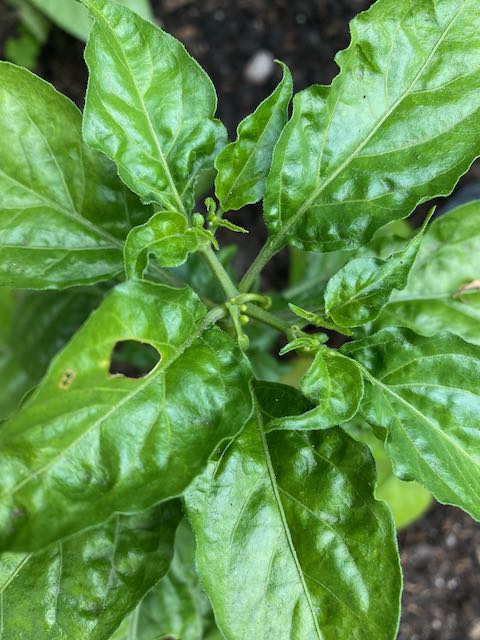
Aphids seem to find their way into every garden. They are soft bodied insects that feed by sucking the nutrient rich liquid out of your plants and so in large numbers they can do a lot of damage and can weaken the plant significantly. They multiply faster than the blink of an eye so the quicker you act on them the better! Identification is easy, found on the underside of leaves (they’ve been rife on my aubergines this year), they’re pear shaped with little antennae and can be seen with the naked eye (see images below for leaf damage and aphids ). They are a pest to all plants and are quite generalised although you do get some species that target specific plants. It’s easy to see if your plant is suffering as the leaves become misshapen, they curl and they turn yellow, the plant grows deformed and misshaped. The leaves are often sticky from the sap they’ve been sucking out of your plant.
In the case of white fly these suck sap from your vegetable plants and thrive in warm conditions especially under glass. You’ll know they are there because of the clouds of small white winged tiny insects that emerge if you move a plant, you’ll also see tiny white skins surrounding the plant on the surface of your soil. If left to their own devices the plants develop a mould which grows from the sticky secretions from the insects and turns the plant leaves black and sooty.
I spray my veggies with very diluted washing up liquid, above and on the underside of the leaves; I do this every few days in the morning only for a good couple of weeks. I also wipe the leaves with the mild solution, which is laborious but effective. Spraying with a strong jet of water is simple enough to dislodge the aphids so that’s good too. You can also use biological controls releasing them onto the plants. Parasitoid wasps ‘Encarsia formosa’ prey on white fly nymphs and ‘Amblyseius andersonii’ is an egg predator, both of which will cut out the populations and you can buy these readily online. It’s also really important to provide good ventilation when growing plants under cover, keep the greenhouse doors open as much as possible from May onwards is imperative to a healthy environment.
Talking about biodiversity, companion planting can help to keep aphids away from your plants in the first place. Some of these flowers mentioned deter aphids but they’re also nice to look at and provide colour in a somewhat green ‘veggie’ bed!
Aphids are attracted by nasturtiums and mustard and act as plant traps. The aphids will favour these instead of your veggie plants so I always grow these alongside my tomatoes and amount the veggies outside. Garlic and Chives will keep aphids off your lettuces and peas if planted alongside and Catnip repels aphids. Marigolds will deter aphids because of their smell so I grow these amongst my tomatoes too. No matter how bad things are try to avoid pesticides and chemical controls, while they are a quick and often effective solution, they also will decimate good things in the garden. Pollinators suffer terribly from sprayed plants and there are all sorts of insects and bugs that will be killed from their use, upsetting the balance of the ecosystem is devastating. Biodiversity and a functioning ecosystem is only achieved by providing a diverse range of plants and habitats, leave things be and naturally you will have a healthier garden.
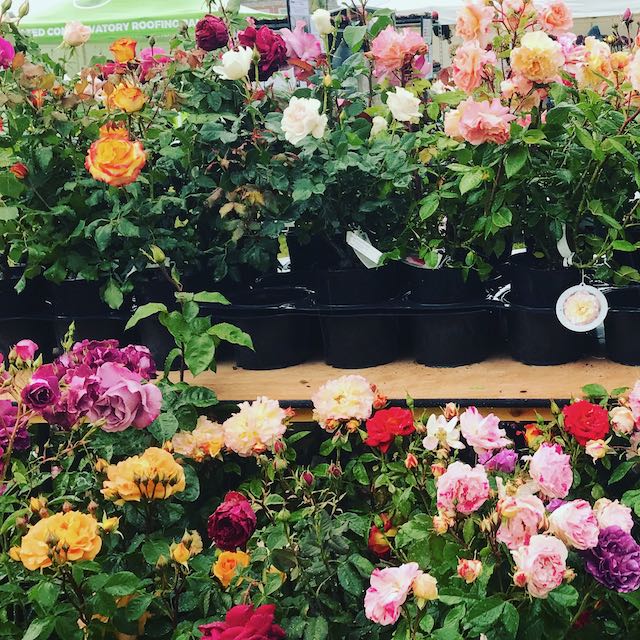
Thank you for reading but lastly, just a heads up, next weekend I shall be working at ‘Stanstead Park Garden Show’. I will be selling roses for Eastcroft Roses, a superb small family run company ( based in Kent ) that grow their own roses. I may be biased but these are the best roses I have seen for health and vigour. They’re all grown outside and are much happier for it. Anyway I digress, I will be there from June 10-12th so pop along and say hello if you are in the area, it’s a fabulous gardening show that is still focused on plants rather than sundries so a pleasant show to walk around. Details are on google, just type in Stanstead Park Garden Show. Hopefully I shall see some of you there x