
Isn’t it lovely to finally see signs of Spring return? I adore this month, falling in love with the garden again as it creeps towards warmer days. March brings with it many a change in the garden; longer daylight hours, the all encompassing bird song, the emergence of flowers like wonderful anemones, tulips and leucojums, not to mention tree branches laden with blossom.
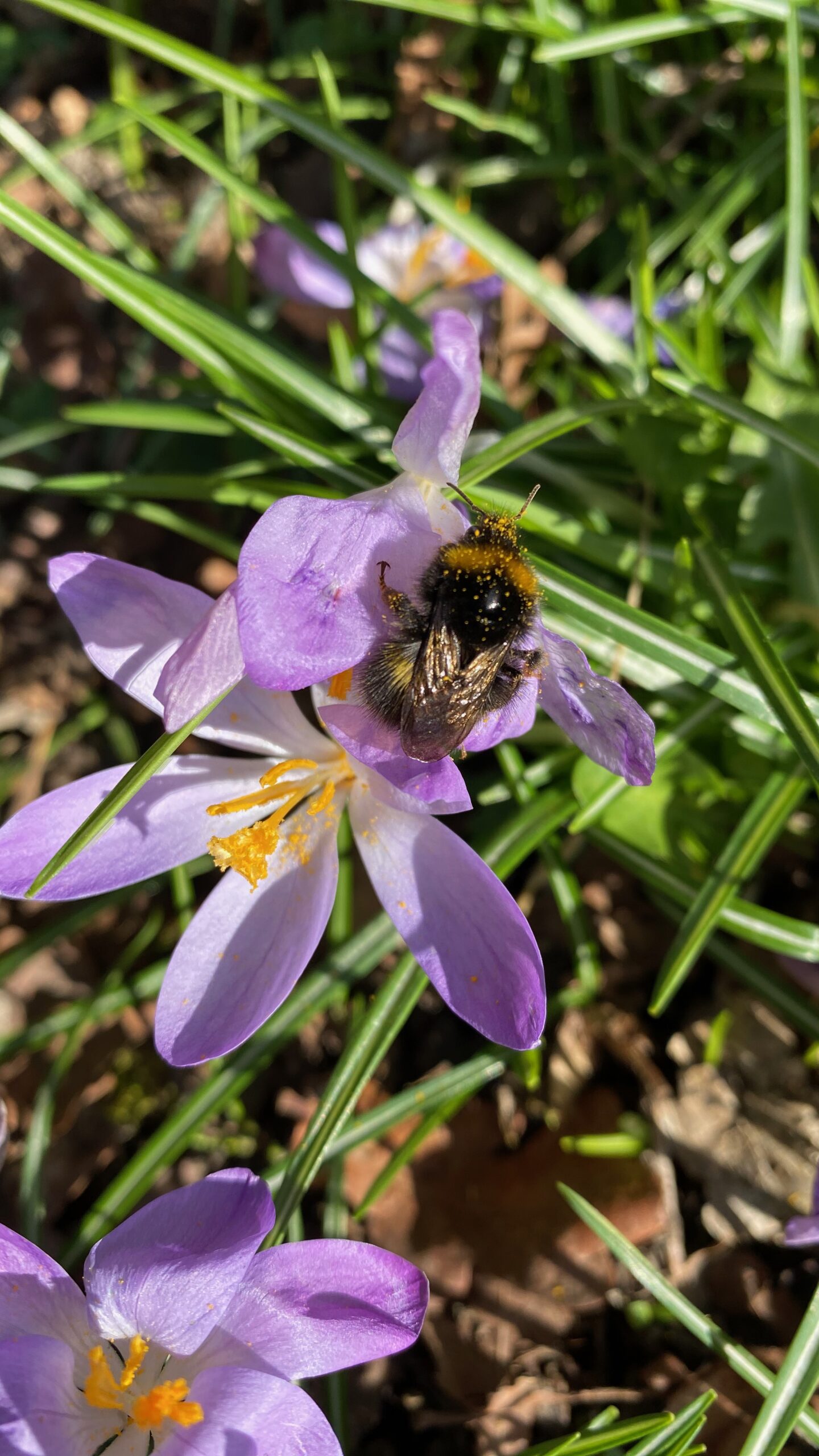
It is still cold outside however and for us in Sussex an Easterly wind has kept it bitingly crisp but the odd few days of sunshine that came, made it feel like Spring was almost within touching distance. The bumble bees were out in force, falling over the Crocus pollen like drunken fluff balls. I adore them and could watch them for hours, its the queen bumble bees that are out first, for them, this is a very vulnerable time when pollen and nectar sources are scarce.
The spring bulbs are pushing their way out of the ground and making an appearance, following on from snowdrops, that little bit of warmth we felt has sparked everything underground into action and the spring bulbs have gone crazy. I planted more bulbs last year in the shady part of the garden, the tete-a-tetes are up and I can just make out my favourite spring bulbs Muscari peeking through the moss. Next year I will definitely be adding Muscari ‘baby’s breath’ to my collection, an adorable pale lilac, it’s divine.
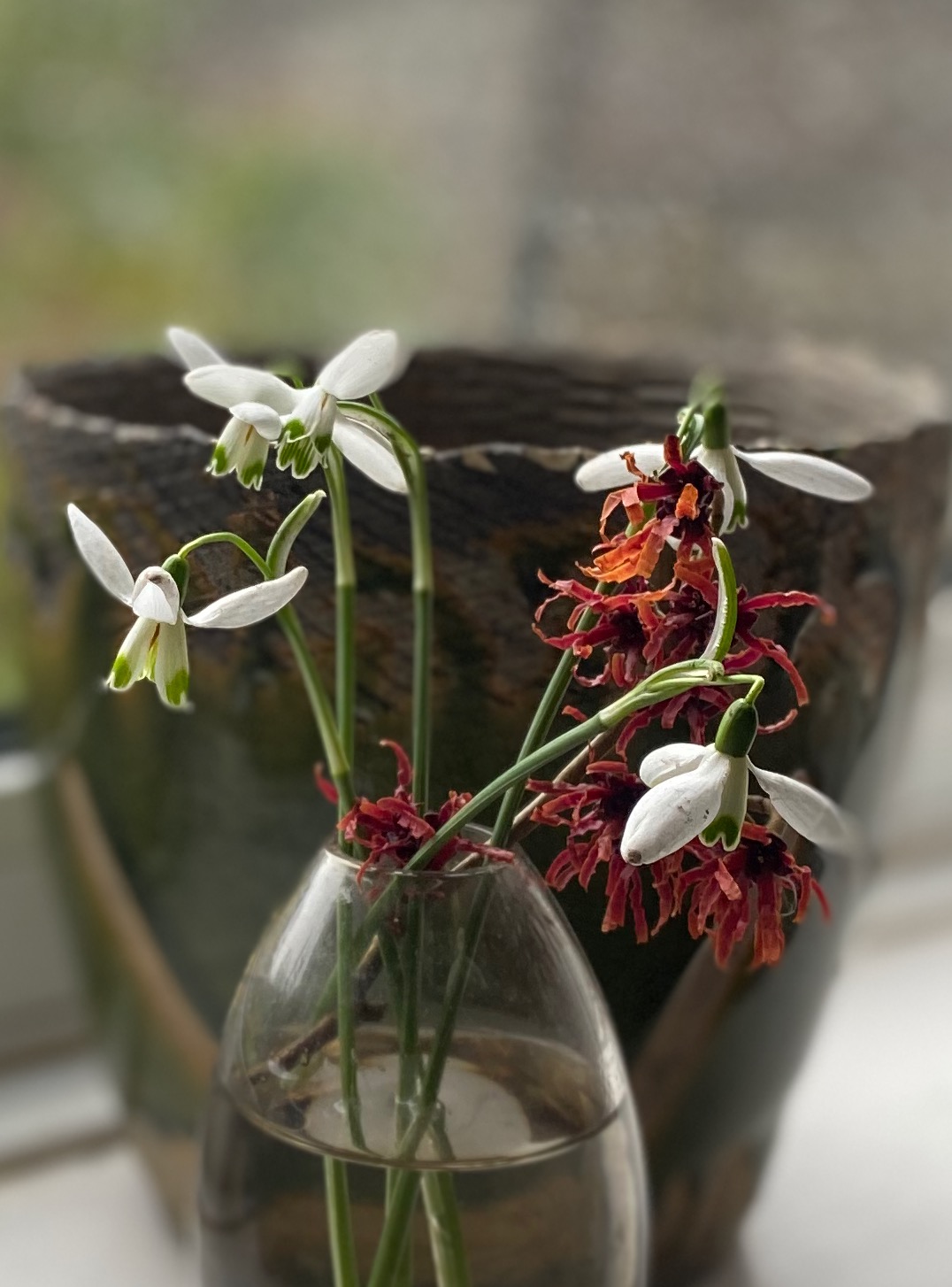
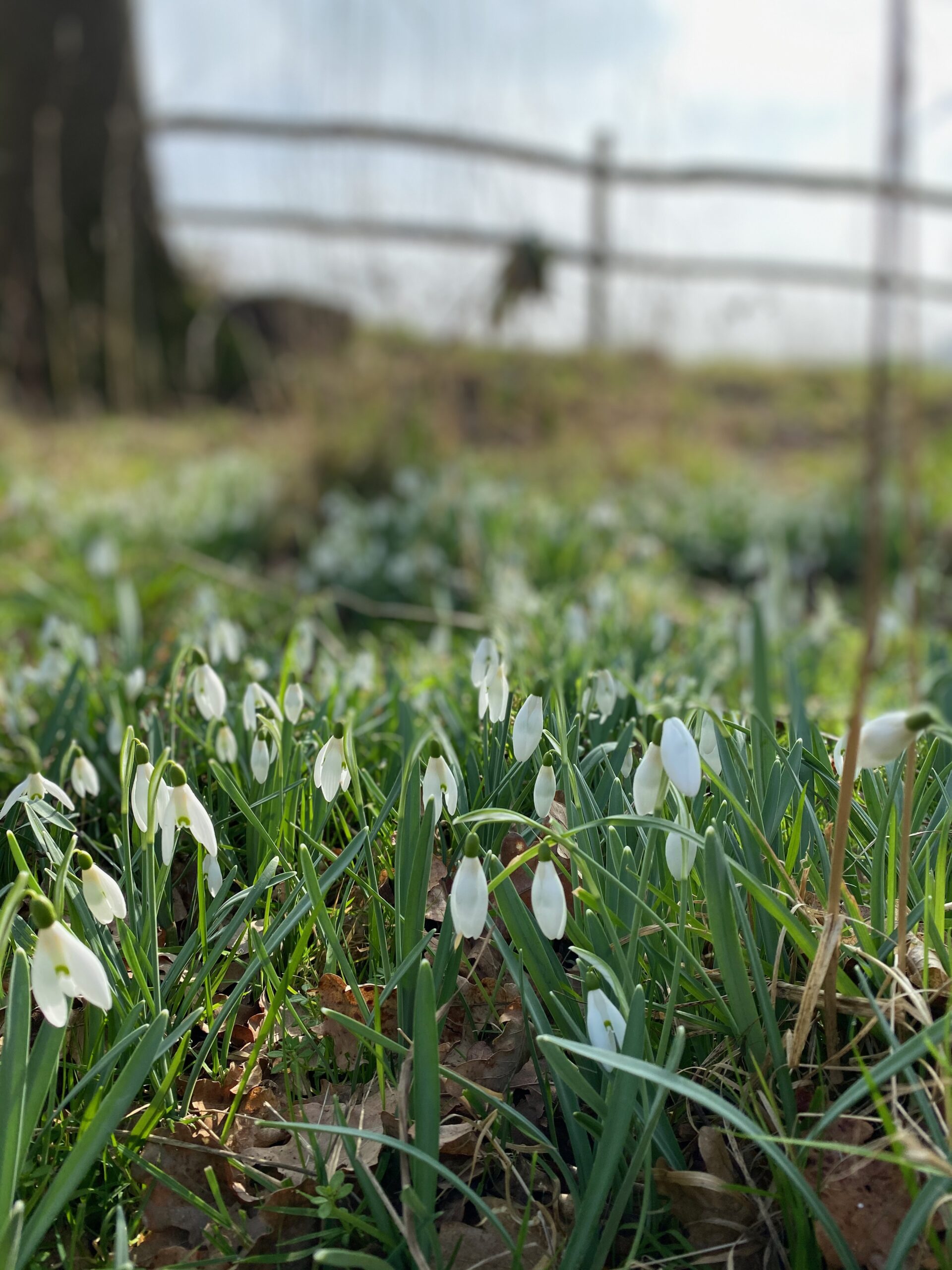
Once the snowdrops start fading its time to get more plants for free, I mean what could be better? Snowdrops respond well to propagation by division. Simply dig them up and split them by hand into smaller clumps, being careful of the roots and re-plant. Simple but very effective and a great way to increase numbers. These bulbs look so much more natural when they are planted in groups and drifts, just like they would be naturally.
I don’t know about you but I am generally feeling much more buoyant what with the longer daylight hours, it makes an enormous difference to me, sowing gets into swing and my life is taken over by seeds, seeds and more seeds. Last week was my first week sowing, aubergines, beetroot, onions, peas, early brassicas ( like broccoli) and some herbs like coriander and parsley. It’s such joy for me and marks the start of a new year of new varieties, trials and tribulations.
If you haven’t already done so, now’s the time to think about sowing, but a reminder though, to be mindful of the weather and of course the conditions available to you in your own garden. If you don’t have somewhere frost free to put your tender seedings then you might just want to hold off until April. Generally though, for seeds that can be sown outside take note of what else is popping up, weeds tend to show their ugly heads so if they are growing, so will your seedlings. Deal with new weeds as and when they pop up, much easier to deal with them at the tiny seedling stage, choose a dry day and rake lightly, the tiny seeds are killed by root disturbance and taking some time to remove them will serve you well through the remainder of the year.
Seeds I will be sowing this month are numerous, of the tender varieties, tomatoes, chillis and sweet peppers but my replacement greenhouse isn’t due until March 15th so I will be holding off until just before then, the idea being that I can germinate inside with warmth and then move then to the greenhouse to continue growing. Don’t be tempted by what I call ‘ plant-social media’ to sow these too early they will do much better if you just hold off for a bit longer.
Depending on the conditions, if the weather is warming towards the end of the month ( not before 15th), cold-hardy vegetables can be sown too, parsnips, peas, broad beans, beetroot, peas for pods, carrots, celery, celeriac, broccoli, turnips and spinach or chard can be sown outside. Have a feel of the ground, does it feel warm to touch? Are the weeds growing? If the answer is yes then you’re good to go. if you can cover with horticultural fleece, this helps to keep an ambient temperature, protect from wind and just helps them establish that bit quicker, nice but by no means an absolute necessity.
I module sow all of my seeds, i.e. start them off in module trays then plant out when they are ready, ( except a few root crops such as parsnips and carrots, they go direct into the ground) but by all means you don’t have to. If you cannot do module sowing due to space then don’t worry. Above all don’t stress about time lines, observe your garden and see what is growing naturally, timelines are not set in stone and I’ve said it time and time again, there is no rush and lots of seeds will be fine if you just bide your time. Many seeds are repeat sown throughout the year for a continual supply of crop ( e.g. lettuce) this is known as successional sowing and I will be talking about this more next month.
For the flower lovers mid- late March is a great time to get your hardy annuals sown. If you are unsure of the difference between hardy annuals and half hardy annuals then have a look at my growing guides (link on my website www.queenofseed.co.uk ) I sow a lot of my hardy annuals in Autumn and over winter them but Spring sowing works fine, some of my favourites are Ammi, Verbena Bonariensis, Borage, Cornflower, Eschscholzia (Californian Poppy) Calendula and Nigella. They’re all loved by the bees and for me that’s what it’s all about.
Monthly tip : I water my seeds and seedlings with warm water and only from the bottom not the top. ( water from the bottom helps prevent rotting at the base of the stems )