
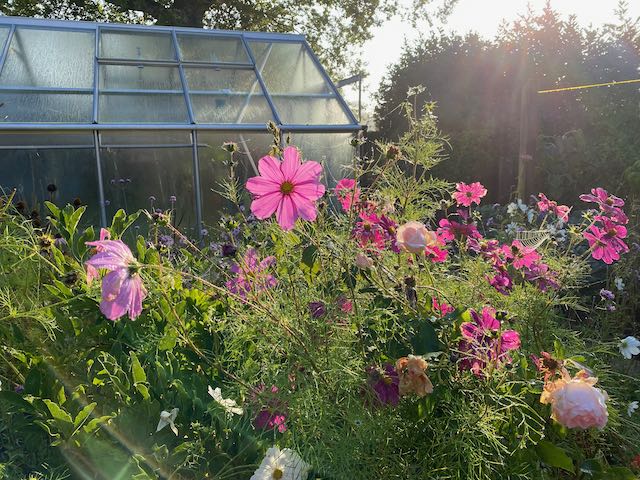
The garden is winding down, flowers are fading and harvests are plentiful. It’s time to slow down, start to tidy up and gently ease the garden into winter.
I am not a fan of going crazy at this time of year, a lot of you will be feeling like you just want to do nothing in the garden and that’s fine, in fact the longer you leave the garden as it is, fallen leaves, spent plants etc etc the better for insects and wildlife that will use the fall as little hiding places, particularly as it gets colder. At the moment though the garden is warm and there’s a lot to love and my pollinator garden is looking ethereal in the morning light, the Cosmos look divine even when fading, they’ve been a huge success flowering for months.
For the veggie growers clearing beds is something that is necessary for winter prep, wether you are clearing for fresh winter planting or to get ready for mulching, removal of dead and decaying veg is a job that’s at the top of the list, in my next blog i’ll be talking about mulching and winter planting.
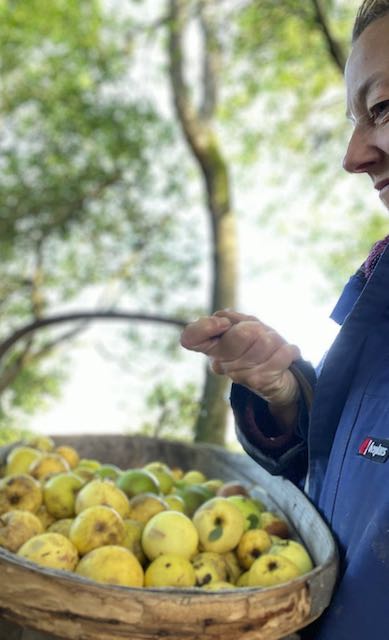
One of my favourite pastimes in Autumn is to collect Crab Apple windfall from the woods nearby. Crab Apple Jelly is so easy to make there are numerous receipes online and its just a case of wash the apples and boil them whole, no need to remove the stems or skin, its so simple and makes the most beautiful coloured preserve. I have popped the recipe here so you can use the same, feel free to play around with it or add in a chilli or two for that extra kick.
1.5kg apples will make approx 3 jars.
Boil apples in large pan of water, it doesnt really matter on weights, just make sure the water is covering the apples. Boil for about 20 mins until soft and mushy
Drain in a muslin bag or seive into a large saucepan overnight. It is very important you leave to drip dry, dont squeeze the pulp or the jelly will go cloudy.
The following day weigh the liquid and add approx 1/2 to 3/4 of that weight in sugar. Boil and remove any white scum that forms on the top. Boiling times vary i find, some recipes say 8 minutes but i’ve had to boil for much longer than that. To test the setting point (150 degrees -use a thermometer) or put a small plate into the freezer to cool it, pop a test teaspoon of the liquid onto the cold plate, as the jelly cools it should ‘set’ a bit like a jelly and wrinkle up if you push your finger into it. This means is ready to set. If it’s still too runny then keep boiling. At this point pour into warm sterilised jars and leave until cool.
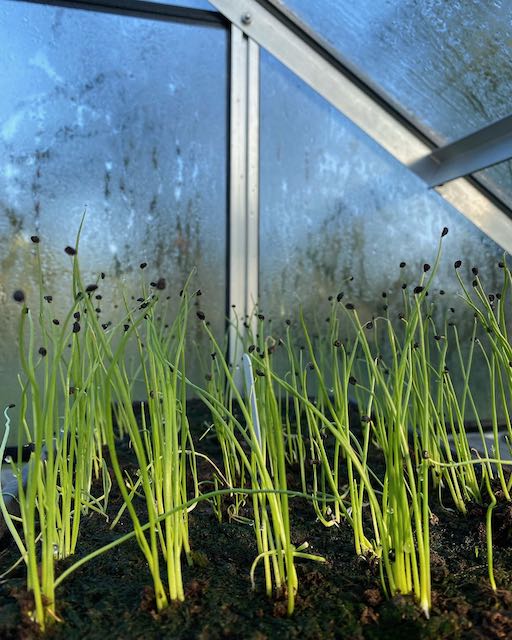
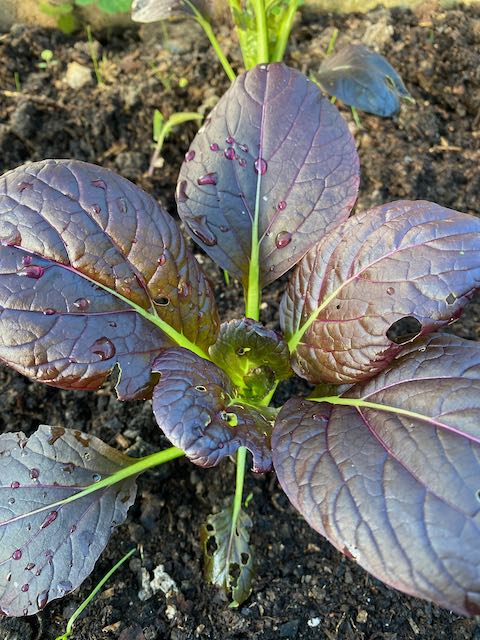
I like to keep some fresh growth through the winter so its a good idea to make a late sowing of some lettuce, spring onions , coriander and parsley and perhaps some oriental greens, they germinate quite well at this time of year and can be grown in a greenhouse or under cover outside. In the greenhouse currently I have some purple Oak Choi, Choi Sum ( which has bolted ) and some rocket. I’ve got some Lambs lettuce and some winter lettuce to sow as well as some spinach, as usual I sow into a seed tray first then prick out into modules and then plant the little modules out. You can direct sow but I would advise covering with fleece to aid germination, the ground is still warm so should be fine, Actually Spring Onions are fine left uncovered once germinated, as long as you choose a variety that stands well in the cold, such as Lisbon or Lillia.
This time of year is one of the most busy harvesting months so I thought I would talk to you about preserving and storing vegetables over winter, if your garden is anything like mine I can guarantee you will have produce left over! My husband always comments on the amount of one variety I grow, like 40 lettuce ha ha , no idea why I do need that many but I just like to grow! I think the trick is to sow smaller amounts through the year, something that escapes me so preserving can ensure that you do have something from the garden in the colder months.
I am not particularly a fan of freezing, maybe because I get mixed results and I like to eat fresh as much as I can, however there are a few things that I always freeze which work well and more importantly don’t lose flavour. Root veg, carrot and parsnip, beetroot, work well frozen, particularly useful for lasting through winter, I blanch for a couple of minutes then lay on a flat tray pop in the freezer and once frozen transfer to a bag, that way they don’t all stick together. Celery works well this way too and sometimes I will chop up my celery first so I have ready made diced celery to hand, again freeze flat first then break it up and pop in a bag. Tomatoes, garlic and onions if cooked first and then blended make a perfect passata like tomato base for all manner of dishes so I make a load of this using up the remainder of the tomatoes ( if there still are any!). Green beans, runner beans, young Borlotti beans all go in the freezer here and there through the season, its surprising how fresh tasting they are defrosted and yes they are a little soggy when you defrost them, the taste overcomes texture so it’s a yes from me. I recently discovered that pesto is great frozen once made up, you can save into mini pots ready to defrost at any time, on the same note, I harvest my Basil leaves just before it get too cold and it starts to go over, I break it down with a pestle and mortar and then press into ice cubes, its then ready to use in any recipe you like and it tastes lovely.
Aside from freezing there are a number of preserving options including salting, pickling and fermenting all of which I love to eat. Pickling and fermenting have similar properties in that they use acidic conditions to preserve food, vinegar for pickling and lactic acid in fermenting, both are a useful tool to preserve the taste of many veg and in the case of fermentation will create beneficial bacteria too and thus up the stakes for healthy eating. You’ve probably heard of Sauerkraut but you can ferment all sorts of things like carrots, cucumbers, cauliflowers peppers and radish, there are so many recipes online that’s its easy to find one for your favourite veg. I am partial to pickling, Jalapeños and Shallots go down a treat here every year so much so that I could grow at least another whole bed of shallots and it still wouldn’t be enough. Theres a huge difference between homemade pickles and the supermarket stuff because you have more control over how its cooked and what you pickle it with, there’s just no comparison and if you haven’t you must give it a go, honestly you’ll never look back and is highly satisfying!