
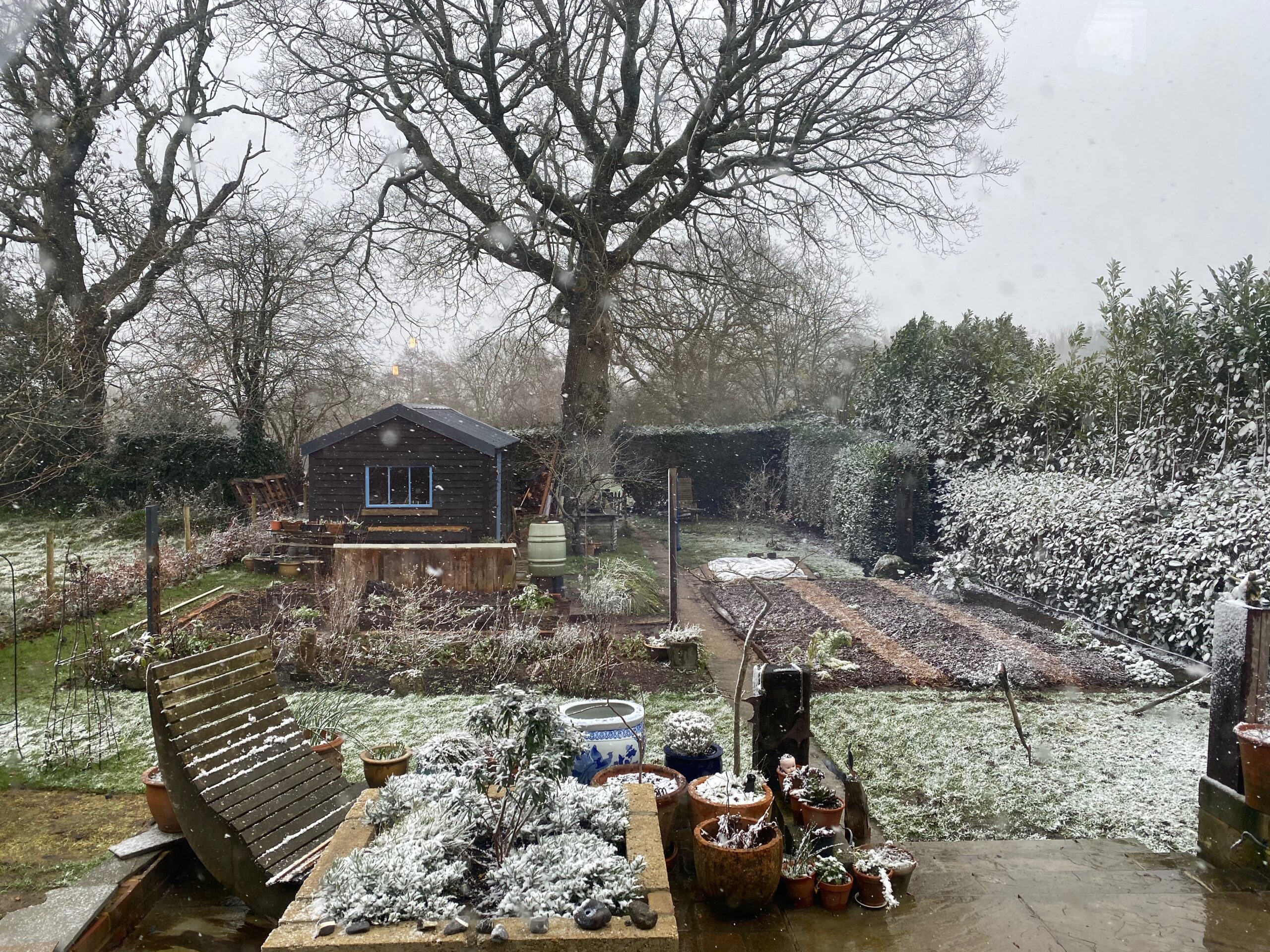
It’s been a cold period in Sussex and the ground is frozen solid, I relish the cold snaps even though gardens look bare and bleak and gardening is not quite as fun as it could be. It’s important to remember that cold is good for us gardeners and essential for many of the plants we grow, although we may feel less connected to the garden and it’s a quieter time, there’s still plenty going on. Despite the freezing temperatures and the snow, there are signs that Spring is almost upon us, its a wonderful time of year when we start to see new life around us, the crocuses and snowdrops are out and bulbs are starting to peak out reminding us all that despite all the changes we have all had to adapt to, the cycle of life keeps moving , the uplifting subtle signs of promise to come.
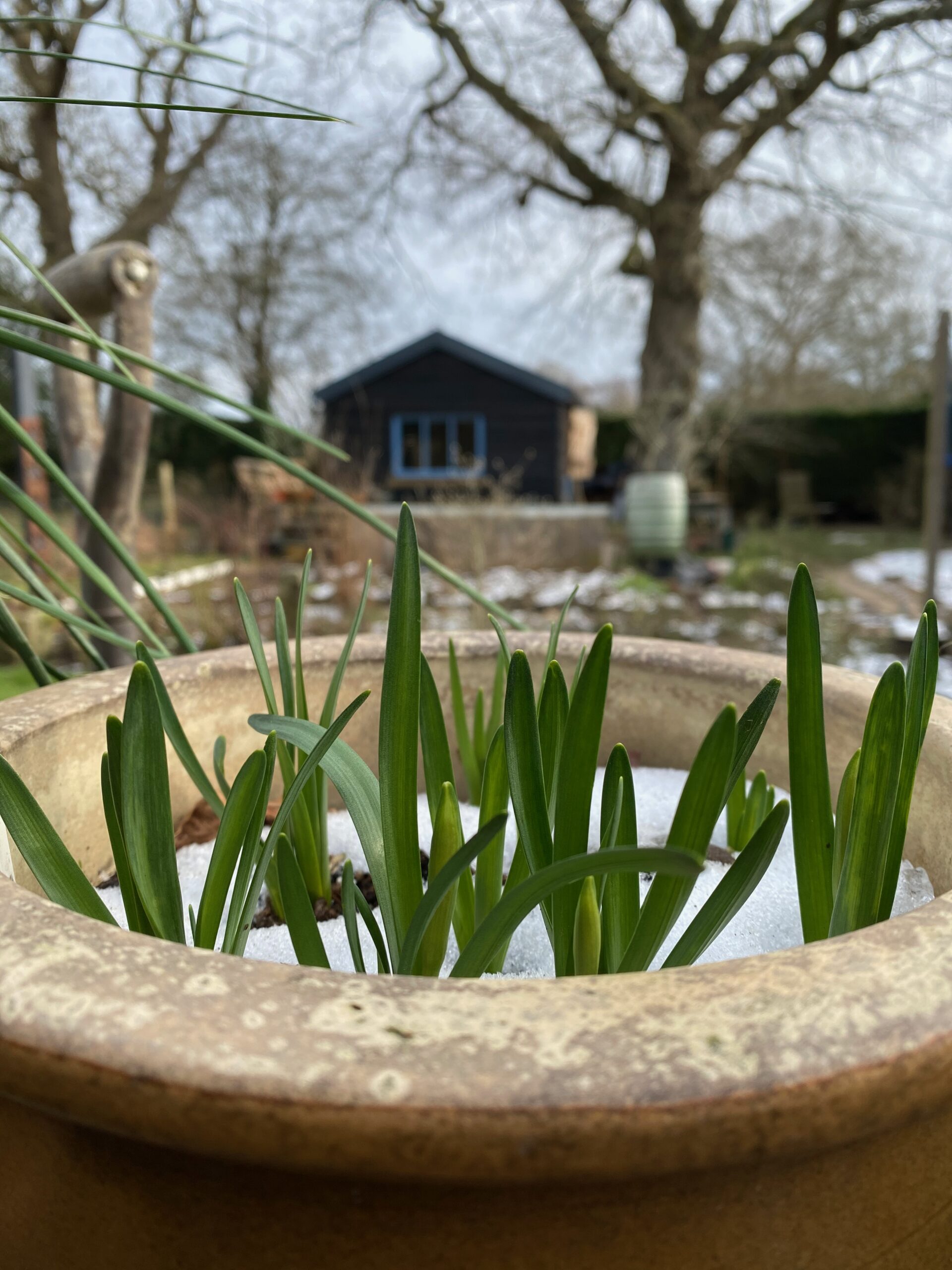


Cold weather brings many benefits to our flora that are vital for the plants well being and there’s a lot going on in the garden even if it is under a ton of snow! Herbacous plants die back and use this time to convert starch to sugars. Cold weather activates a process which converts that starch to sugar and that is sent to the growing tips of the plants ready for their first Spring flush. Biennials often need a cold snap to stimulate them into producing flowers, they produce just leaves in the first year, the second year of flowering occurs after being subjected to a cold period. Bulbs need cold to stimulate stem growth, their root growth being set down in Autumn and some seeds such as sweet peas need a cold snap to trigger the seed into germination.
For saving seed from some vegetables, to sow in the following seasons, rather than treating like an annual, you will need to leave them in situ to go through winter, the following year they will flower and produce seed. Not everyone has the space to do this but do try to save a little space, saving your own seed is vital in the fight for seed sovereignty.
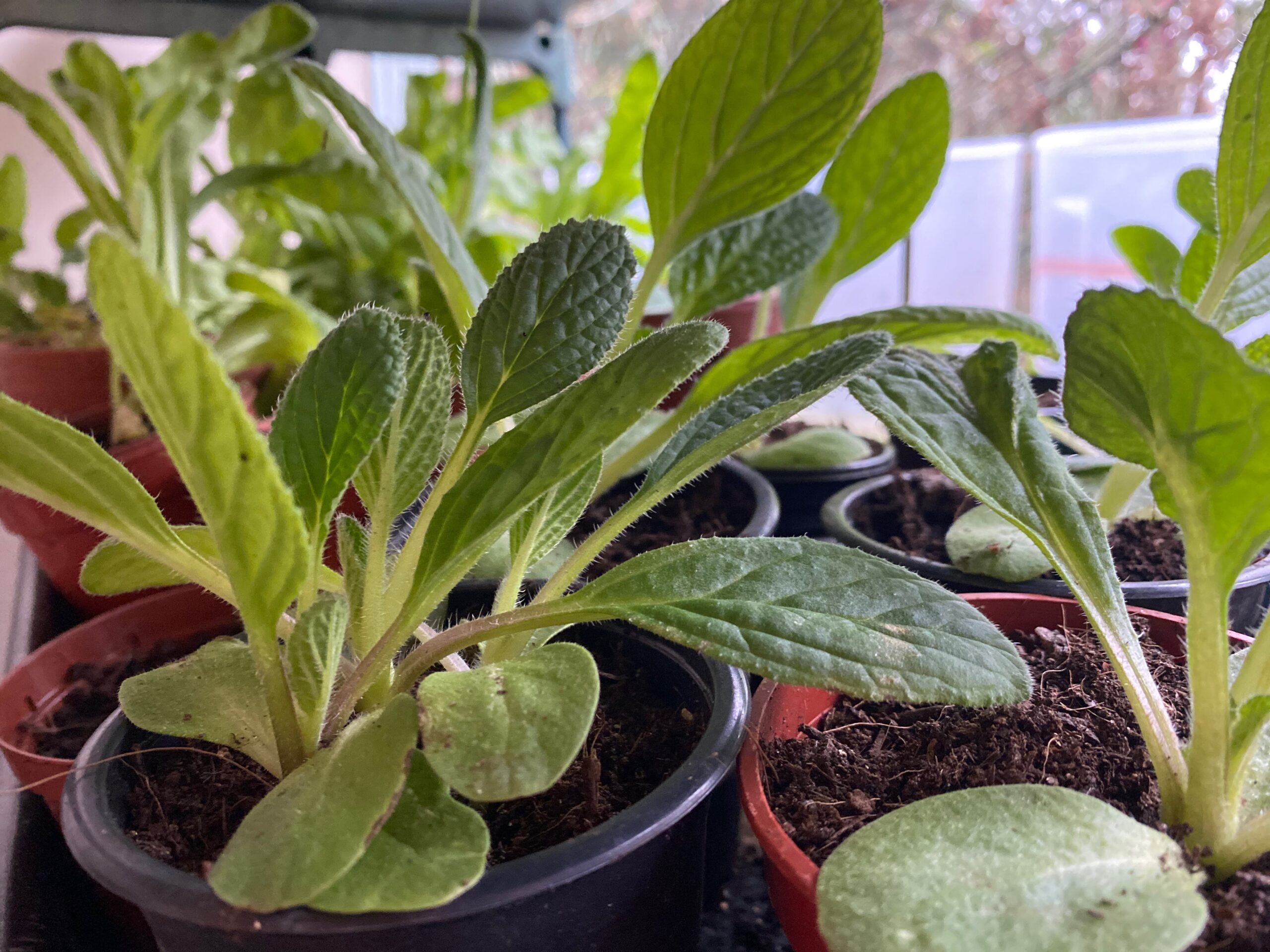
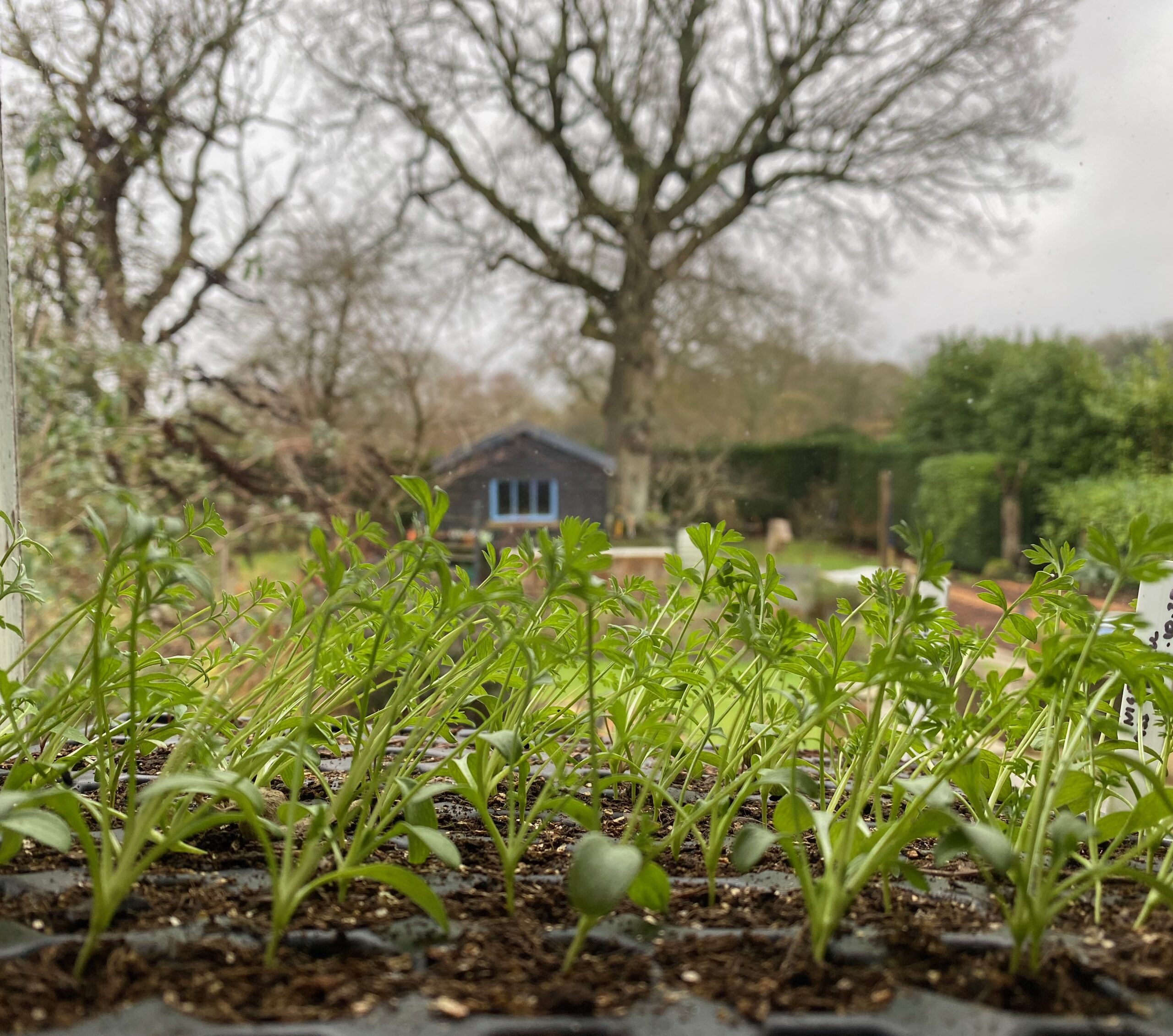
Hardy annuals can be sown in the later parts of the year for overwintering . The main benefit of sowing your hardy annuals in Autumn is that you will get a stronger and more abundant plant. It will also flower several weeks earlier than Spring sown plants. Although you may not see much growth above the ground, underneath it is forming a large root structure which will allow it a massive head start come the warmer weather. In October I sowed Ammi, Calendula, Borage, Eschscholzia, Scabious, Orlaya, Daucus and Nigella. I am currently without greenhouse so for the moment they reside in a cold room, not ideal but until the greenhouse arrives it will have to do they look happy enough for now.
It’s almost time to start sowing for the first time this year. Many gardeners have already started, but for me mid to end February is the perfect time to start, if you are lucky enough to own a greenhouse or poly tunnel to protect your seedlings until the warmth of Spring. For those without, it is possible to germinate seeds inside but its a long wait until they will be happy outside and if you keep them indoors in a warm house, the seeds will get too leggy and weak, best to wait for another month or so, and don’t panic, the benefits of waiting are vast.
If you haven’t already done so then now is the time to think about what seeds you might grow, this month I will be sowing onions, lettuce, beetroots, parsley and coriander, broad beans ( early varieties can be sown before Winter too, like sweet peas), and maybe some early brassicas. Tender warmth loving chillis and aubergines I will sow in March when I get very busy and sowing is done with great gusto, I for one am very much looking forward to it.